Paint System
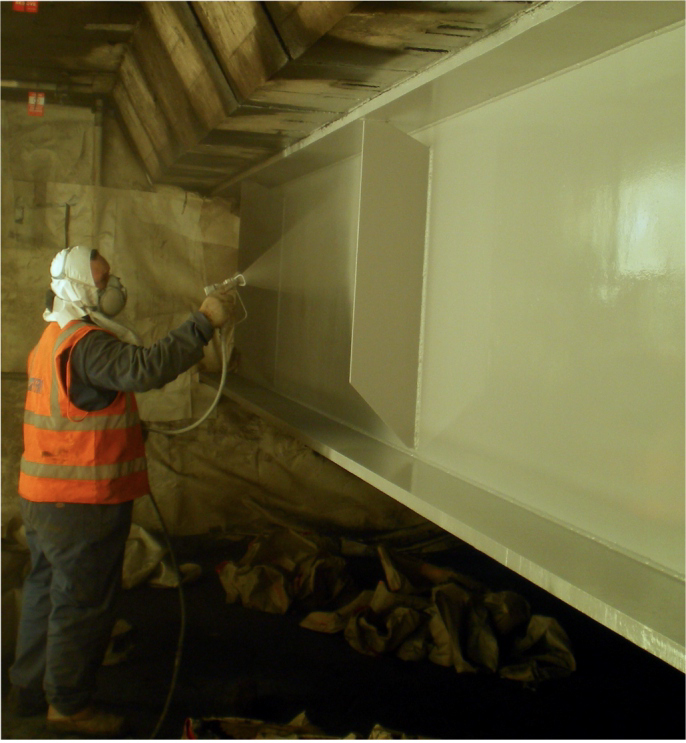
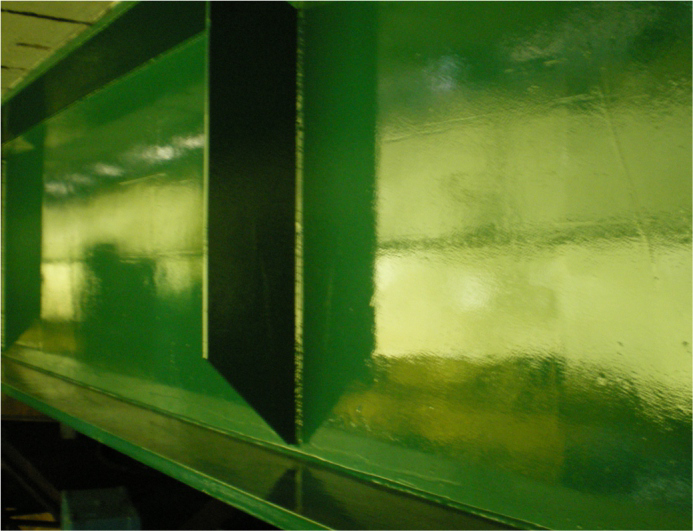
2 x 300 micron/12 mil index coating system using 28.15 Grey RAL 7004 as a base coat with 28.15 Green 14c39 (British Racing Green) as top coat, giving final DFT 0f 600 microns/24 mil. Stripe coat all edges, welds and bolted areas. An index system uses separate colours for each coat to ensure proper coverage.
Preparation Spec
Abrasive blast to SA 2.5/SP10 to give a blast profile of 90-95 microns/3.5-4 mil, rinse down with water where needed on wet areas to clean off blast dust
Ambient Temps'
Minus 5°C/23°F – 12°C/53°F
Substrate Temps'
5°C/41°F – 20°C/68°F (raised using hot air blowers
Material Temps'
In mixed form in batches of 30kgs (5 gal): 10°C/50°F to 15°C/59°F. At spray tip via heating block set at 20°C/68°F.
Equipment Data
Graco 68.1 airless spray pump fitted with 3/8 inch spray line with 1/4 inch whip end XTR Graco spray gun with 4-21 thou spray tip Graco In-line paint heater block.
Film Thickness / Adhesion Testing
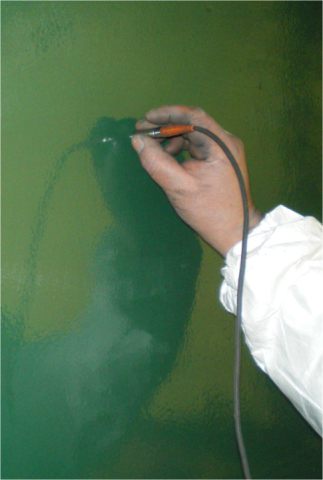
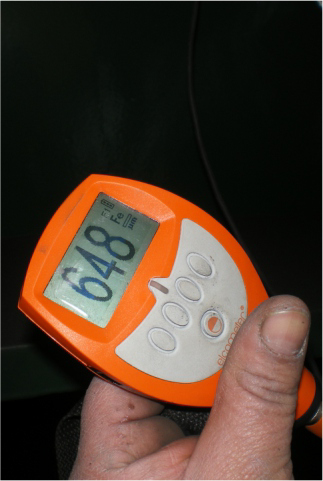
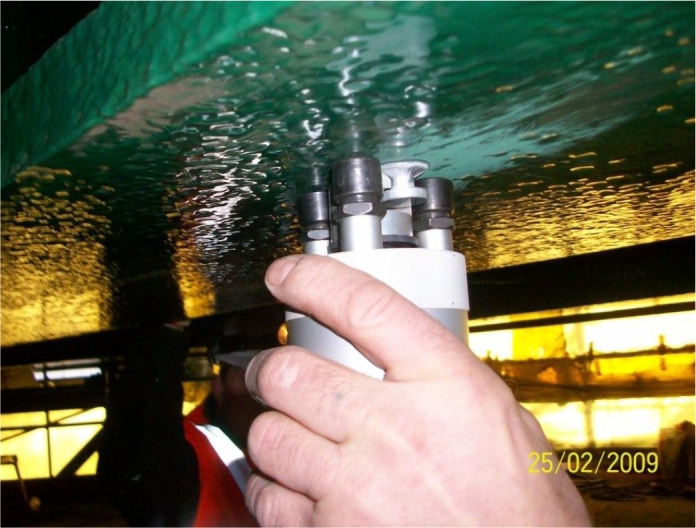
Average DFT – 615 microns. Adhesion – range between 1600 psi and 2000 psi with all separations in the glue line.

 uring refurbishment of a UK rail bridge in winter, heavy snow, extended cold periods and a continuous flow of water from concrete above the bridge beams, made it impossible to use an ordinary coating system. Preparatory blasting work in many areas was beginning to show significant re-rusting because of the delays in coating. The contractors, with expensive scaffolding and other infrastructure in place, were anxious to avoid any further
delays and sought a solution using Alocit.
uring refurbishment of a UK rail bridge in winter, heavy snow, extended cold periods and a continuous flow of water from concrete above the bridge beams, made it impossible to use an ordinary coating system. Preparatory blasting work in many areas was beginning to show significant re-rusting because of the delays in coating. The contractors, with expensive scaffolding and other infrastructure in place, were anxious to avoid any further
delays and sought a solution using Alocit.